Chinese Wedding Banquet Seating Guide: Family Tables and Guest Flow
Plan Chinese wedding banquet seating with family priority, VIP tables, guest flow, table chart checks, and respectful etiquette limits.
A Chinese wedding banquet seating guide should start with family priority and room flow. Seat elders and close family where respect and access are clear, keep hosts able to greet guests, and test the plan before printing the chart.
Banquet seating planning facts
- Scenario
- Wedding reception table plan
- Audience role
- Couple, parents, planner, or banquet host
- Timing point
- Before chart printing and vendor final count
- Family priority
- Elders, close relatives, VIP guests, and host tables
- Flow risk
- Entrance bottlenecks, separated family groups, or unclear greeting path
Map family priority before table numbers
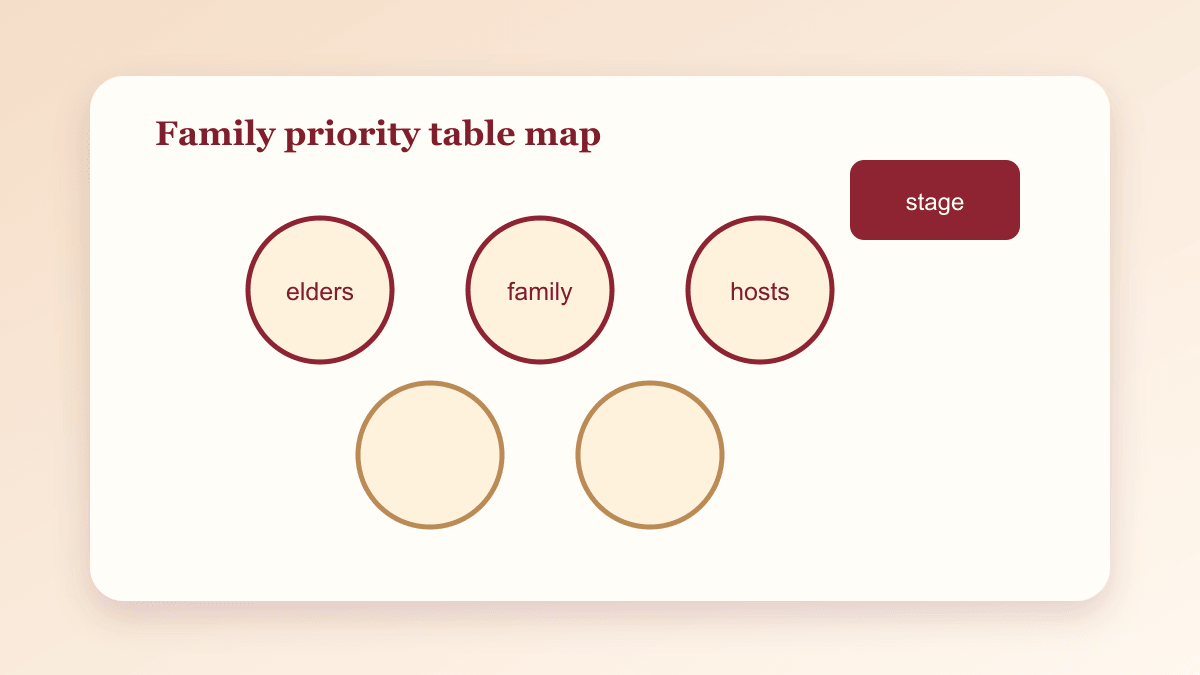
Start with who needs to be honored, supported, or seated near the couple. In many Chinese wedding settings, elders and close family need visible respect and easy access.
Table numbers come later. If the priority list is unclear, a beautiful seating chart can still create awkward movement or hurt feelings. A useful draft should show who needs easy access, who represents each family side, and where hosts can greet without blocking the room. This makes the table map usable for both family etiquette and venue operations.
Test guest flow through the room
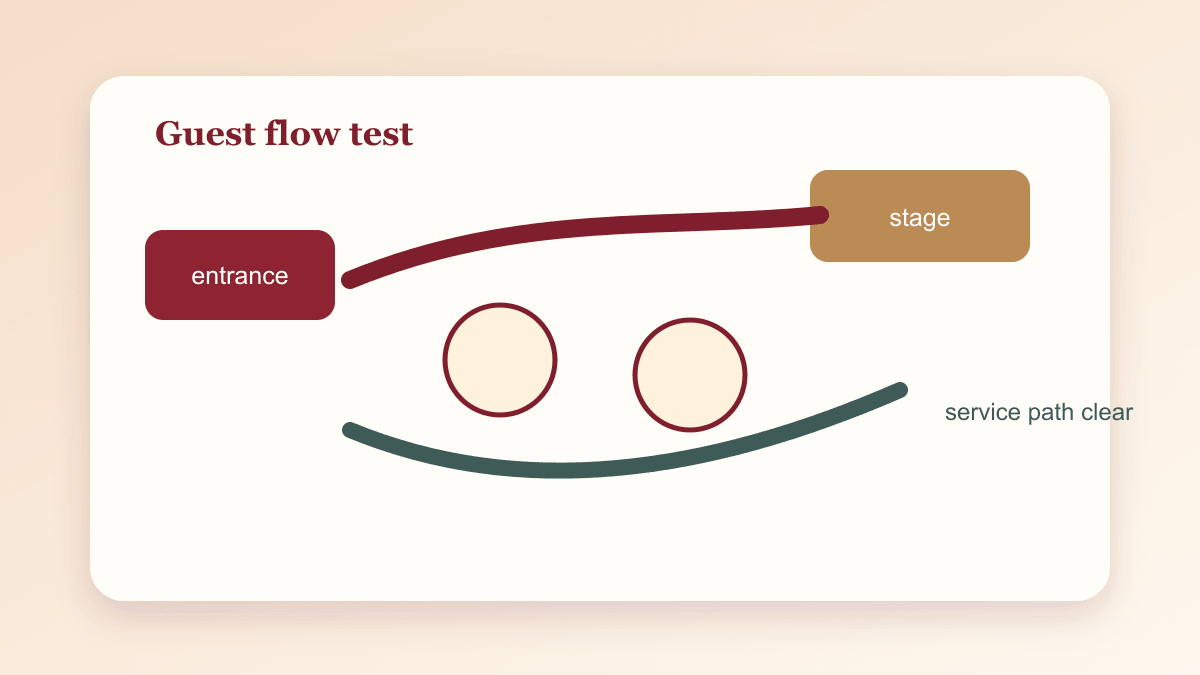
A banquet plan should consider entrance, photo areas, tea ceremony timing, speeches, serving paths, and where hosts will greet guests.
Place guests who need assistance where movement is easier. Keep high-traffic paths clear so family greetings and food service do not compete. Walk the plan from the entrance to the stage, photo area, restroom path, and host tables before treating the layout as final. If one path feels crowded on paper, it will feel worse during the reception itself.
Confirm sensitive placements before printing
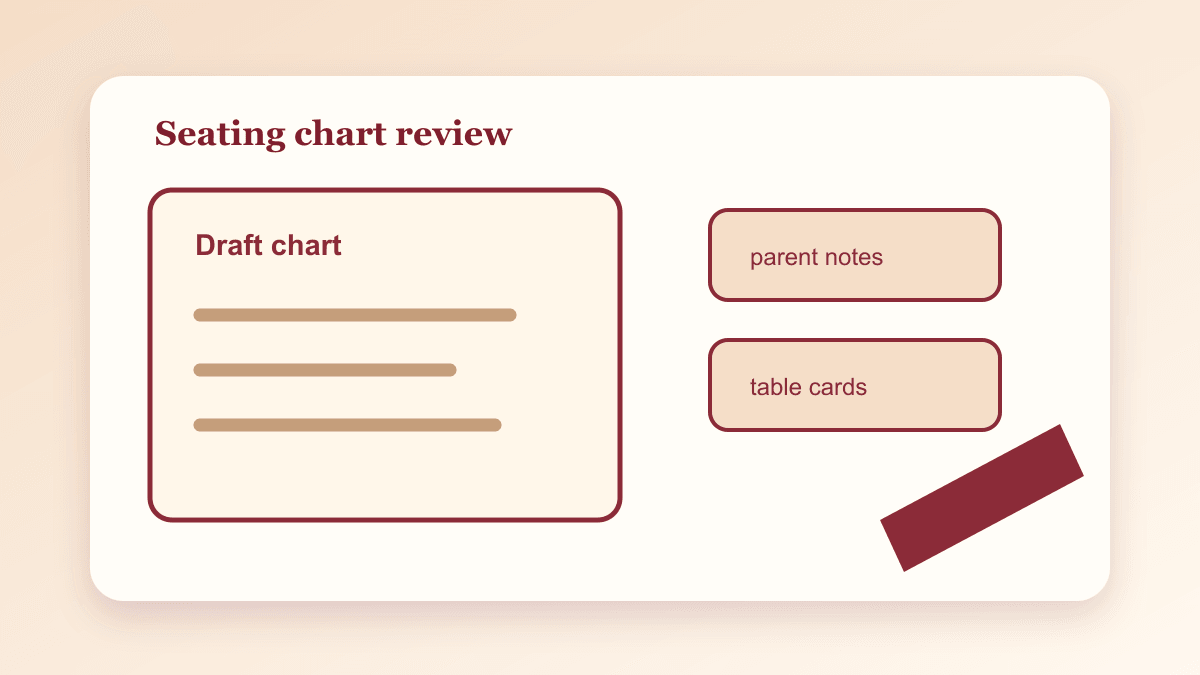
Before the chart is printed, ask parents or hosts to review family groupings, elder placement, and any guests who should or should not be seated together.
A short review prevents last-minute changes at the reception desk and gives the couple a calmer event day. Keep the review practical: one editable seating file, one printed draft, and one person responsible for final corrections. The cleaner the review owner is, the fewer disputes happen at the check-in table during arrival.
Banquet seating review
- List elders, close family, VIP guests, and host roles.
- Mark entrances, stage, photo area, and service paths.
- Review sensitive table pairings with family before printing.
- Keep one editable copy for final guest-count changes.
Banquet seating questions
Who should sit near the couple at a Chinese wedding banquet?
Close family, elders, and key hosts are usually considered first, but family preference and room layout matter.
Should both families have equal table positions?
Many couples aim for visible balance, but the final plan depends on guest count, venue shape, and family expectations.
When should the seating chart be finalized?
Finalize it after RSVP and family review, but keep an editable copy for last-minute changes.
What is the biggest seating mistake?
Printing a chart before checking family priority, guest flow, and sensitive pairings.